The Loghaven Artist Residency is a multidisciplinary artist residency occupying a forested 90-acre ridgeline just two miles from downtown Knoxville. The site is home to six historic log cabin structures originally constructed by Martha “Missie” Thompson in 1935. During the 1980’s and the 1990’s, the cabins had been occupied by a community of creative residents, including university professors, artists, architects and environmental activists. By the turn of the century, the cabins had fallen to disrepair. To prevent various large-scale redevelopment speculations from playing out, the Aslan Foundation acquired the property in 2008, and in 2015, hired Sanders Pace Architecture to preserve and restore the historic cabins and to re-imagine Loghaven site as an artist residency, inviting artists of various mediums from across the world to explore their practice more deeply within the context of a historically and ecologically significant site in East Tennessee.
The McDonough House at Loghaven
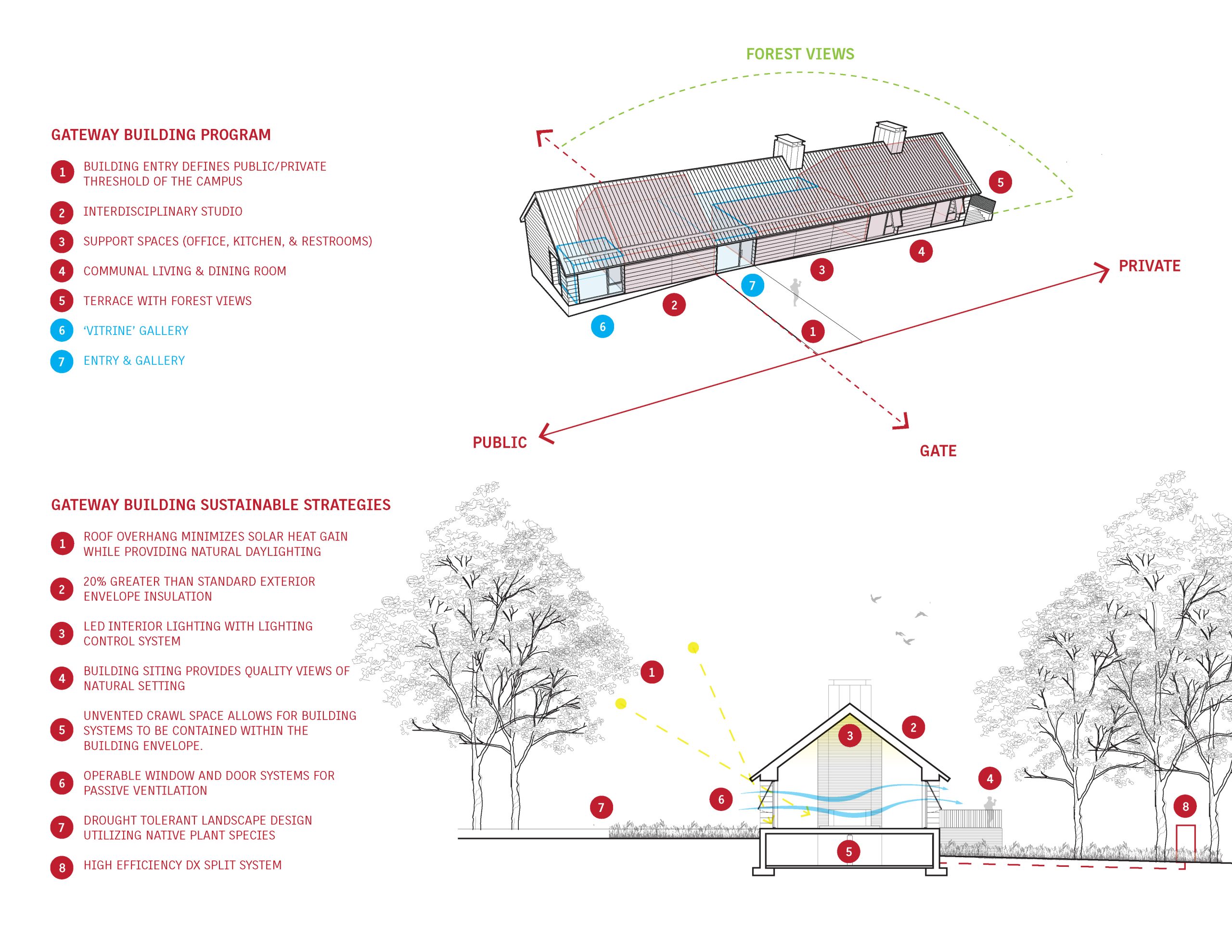
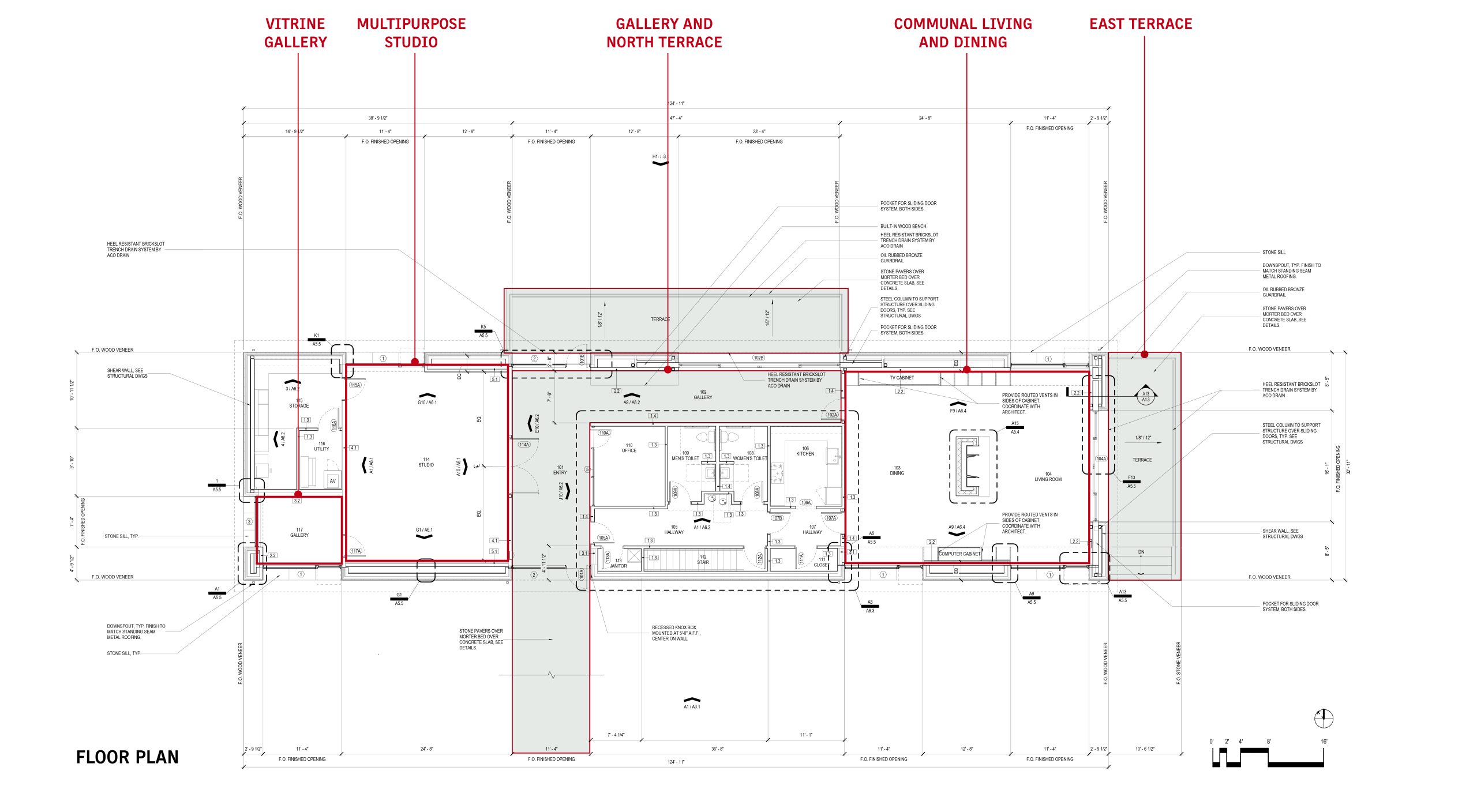
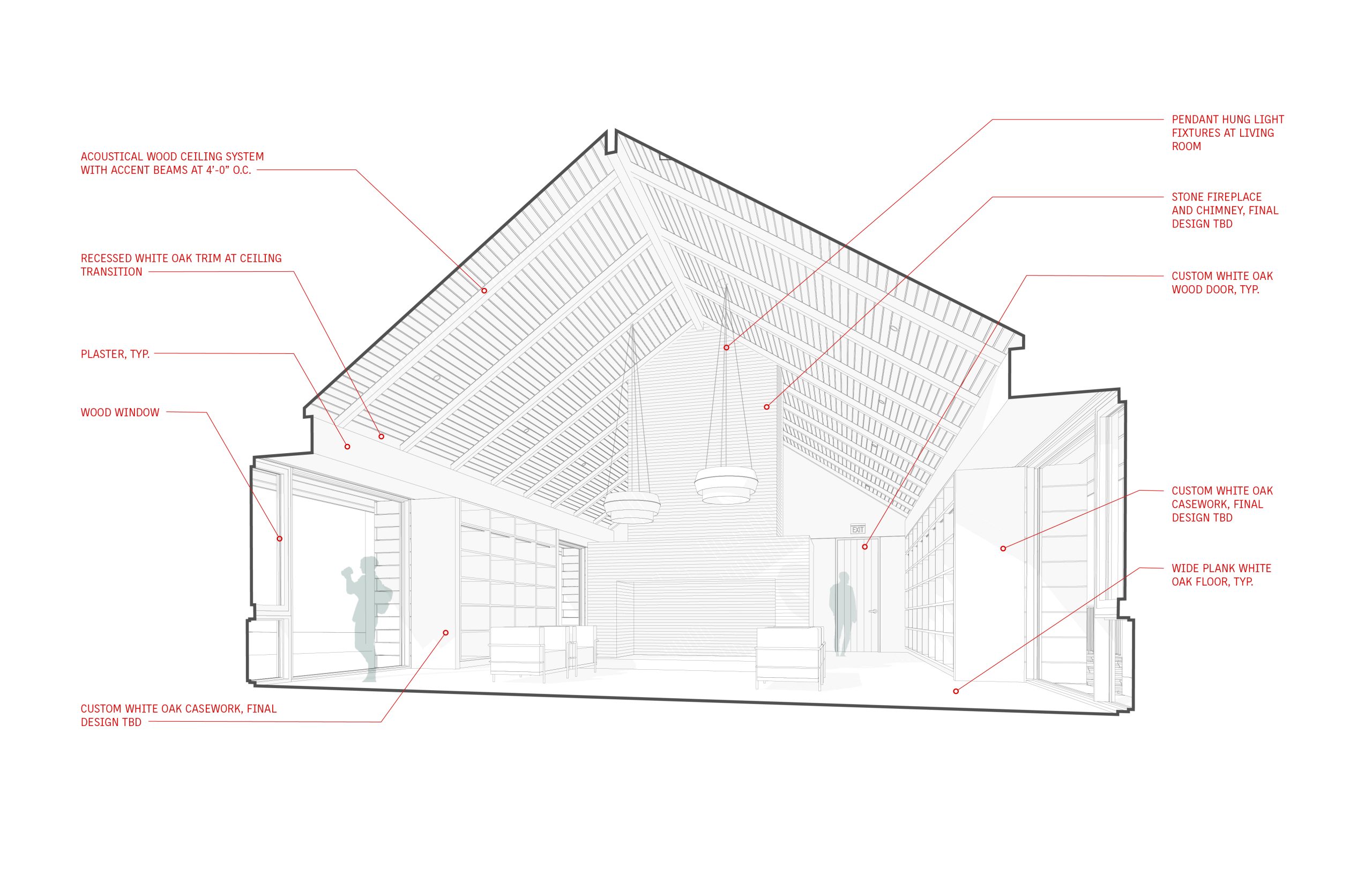
As the vision for the Residency came into focus, a “common house”, serving the communal needs resident artists and a larger arts community, became a core part of the Project Program. In the fall of 2017, SPA and Aslan Foundation began design work on the McDonough House. Completed in 2020, the McDonough House serves as the operations center for the residency program, a visitor center for guests, and a communal hub for the visiting artists and the surrounding arts community. Interior spaces include a rotating entry gallery, a director’s office, a commercial kitchen staffed by a local chef, communal living and dining spaces, and a multidisciplinary studio space dedicated to one of the visiting artists. This studio is also capable of hosting lectures, performances, and multimedia exhibitions. Goals for the project were established at the onset of the design process. The design team established an agenda for new development on the campus that would sensitively integrate any new structure with the historic structures already in place. While establishing a clear distinction between the eras of development was a primary design driver, cues were still taken from the existing cabins to create a nuanced dialogue between historic and contemporary structures on site.
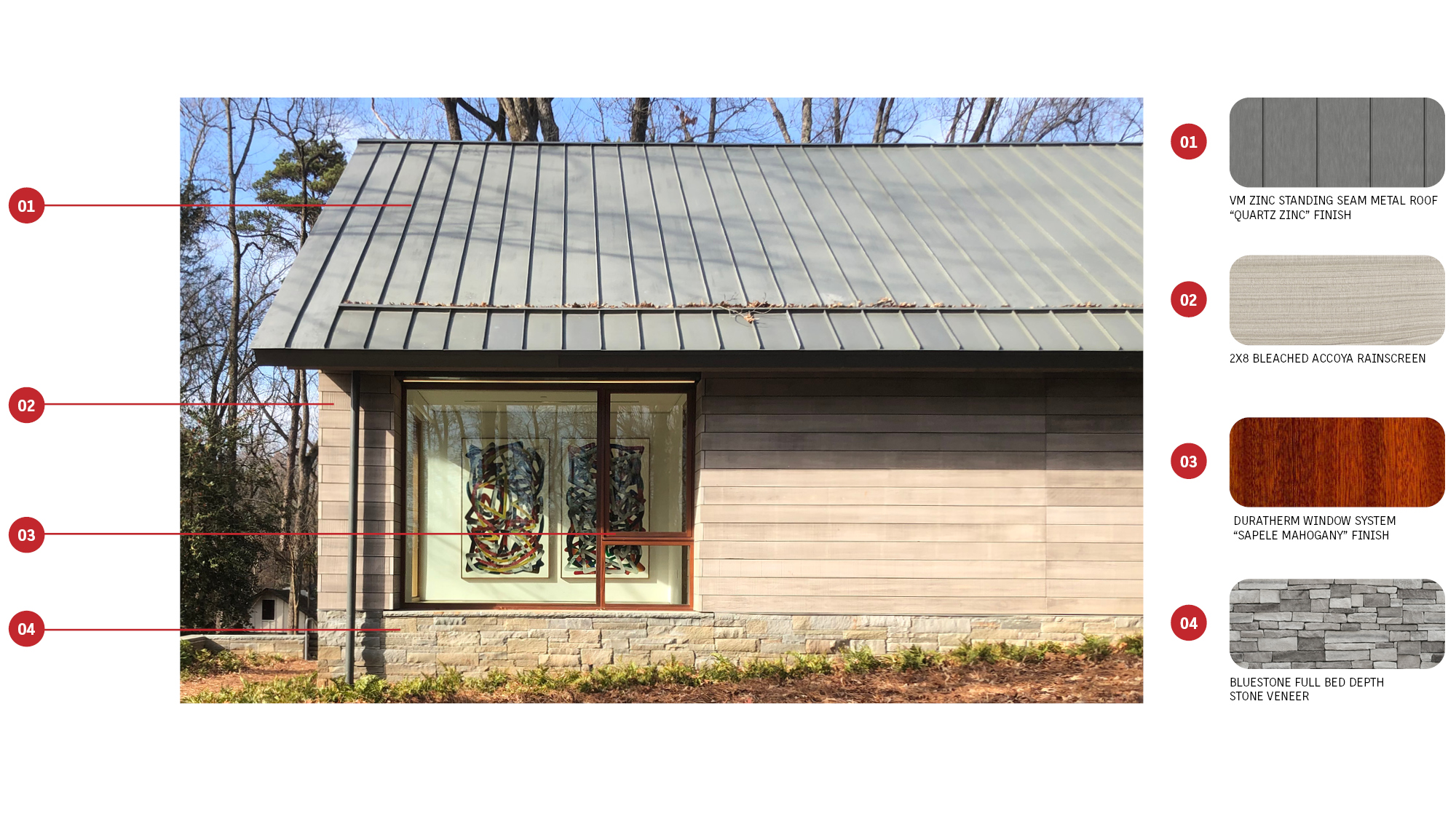
The design carefully analyzed the siting, scale, and materials of the historic cabins as a point of departure for new facilities. The rustic materials and features of the original cabins were translated to the McDonough House in a more refined way. Rubble stone foundation walls were re-interpreted as precisely cut bluestone while the log cabin walls in random lengths were re-interpreted as a sustainably modified wood rainscreen, coursed to match the 12’-0” structural grid of the new building. Equal consideration was given to the design of the site. Indigenous plantings were introduced and preserved, and bronze picket railings, cantilevered from a concealed base condition at grade, were poetically integrated into the landscape with a light touch to define distinctions between public and private spaces. Now an active part of the artist residency campus, the McDonough House serves as a testament to a new era at Loghaven, one which, through subtle contrasts and sensitive refinements, complements and adds depth to the historic legacy so important site.
The Artist Cabins at Loghaven
Shortly after the Aslan Foundation acquired the Loghaven property, the historic cabin parcels were combined into a single lot, and rehabilitation work began. In 2015, SPA began work with the Aslan Foundation to perform an initial evaluation of the condition of each of the cabins. After documenting years of deferred maintenance and poorly constructed additions it became clear that the cabins were not originally built to survive the past 80, much less another 80 years. The National Park Service Standards for Rehabilitation were referenced throughout the design process along with documentation from Civilian Conservation Corps cabins that were constructed around the same time. With these goals established, the historic preservation design and construction began. The 4-year construction project included the rehabilitation of 6 original cabins. Rehabilitation work included numerous structural repairs and modifications designed to be invisible to future artist residents. Substandard additions were removed and replaced with materials more appropriate to the construction of the cabins. Now open, the Loghaven Artist Residency serves as the home for up to nine visiting artists for residencies ranging from two to eight weeks.
Visual and Performing Arts Studios at Loghaven
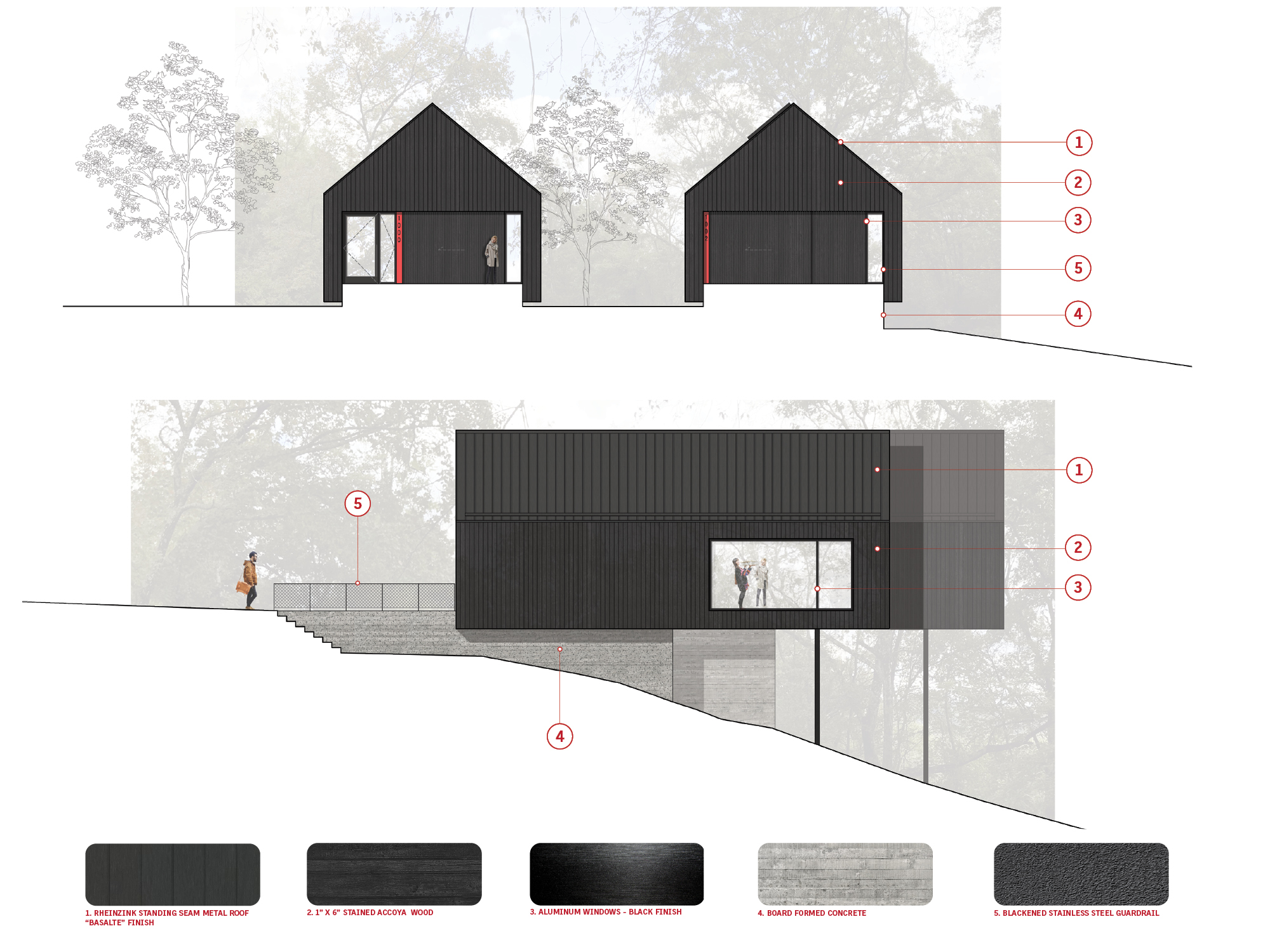
Located just a short walk from the McDonough House through the woods of Loghaven, The Visual Arts Studio and Performing Arts Studio are designed as companion buildings with flexible open workspaces that can accommodate these artists. The Visual Arts Studio incorporates ventilation, a large press, and high-resolution printing capability along with adjustable track lighting in multiple color temperatures. The Performing Arts Studio includes a sprung floor to limit fatigue commonly associated with dance and other performing arts. Each studio is designed with privacy in mind, with large panoramic windows opening to the surrounding wooded landscape and distant views to the Smoky Mountains beyond. The scale and profile of studio structures pay homage to the historic cabins original to the site.