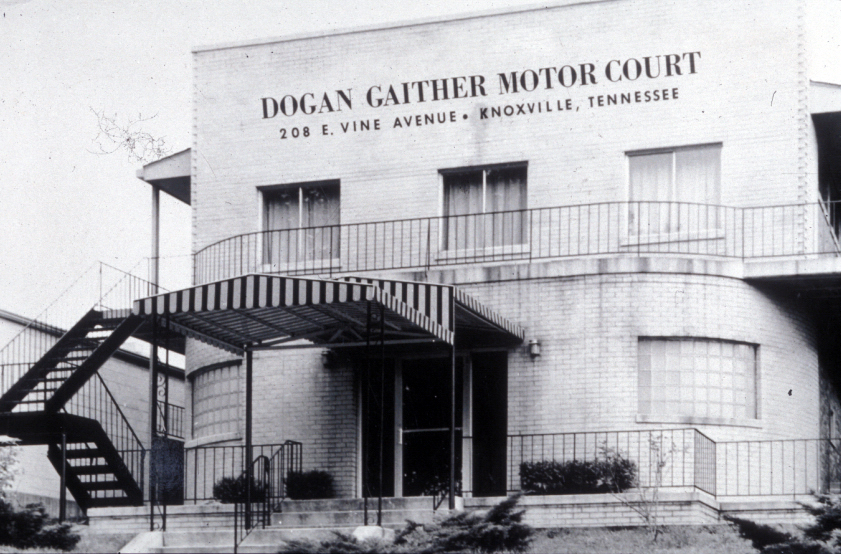
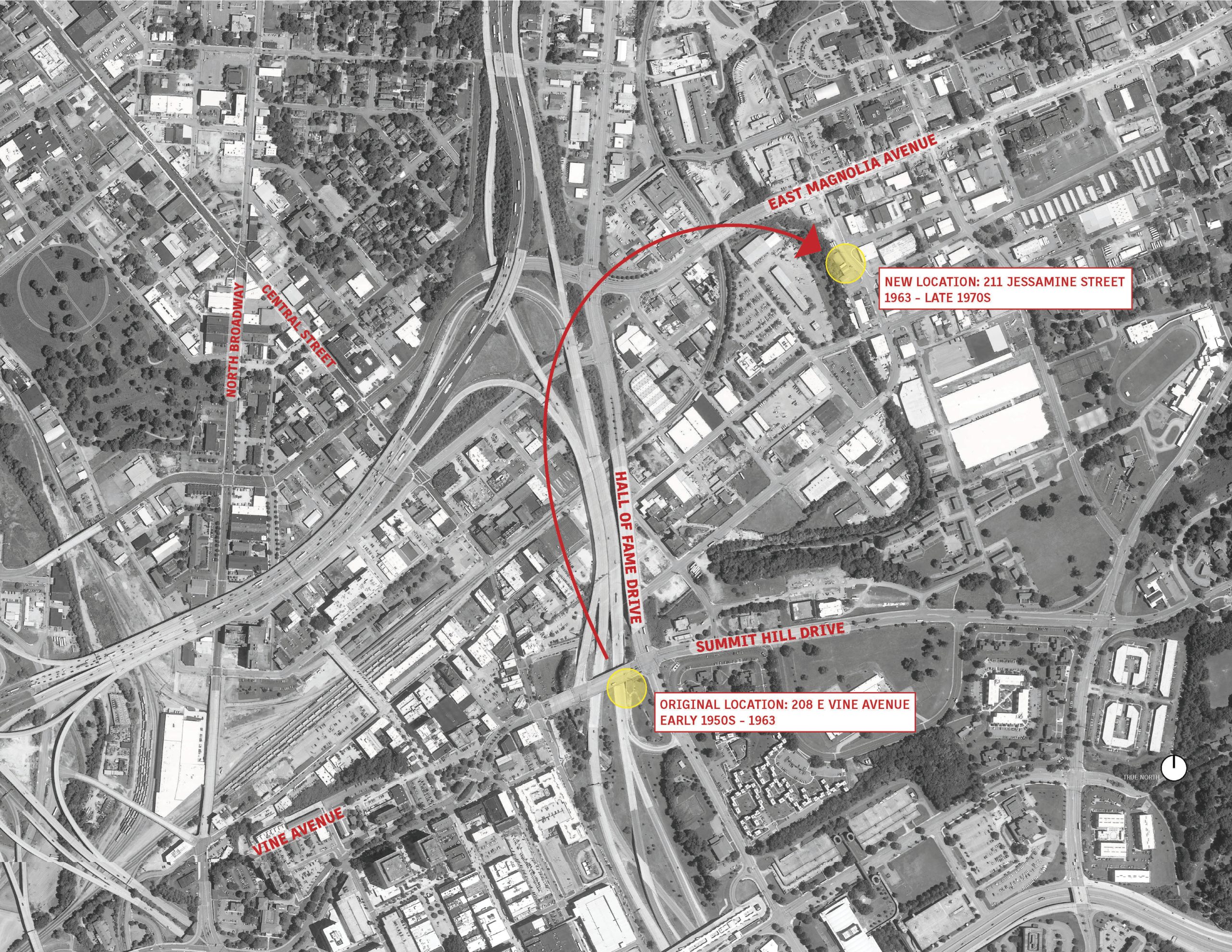
Located within a quickly changing warehouse district just east of downtown, a structure that once thrived as a mid-century motel embodies an important part of the African-American business history in Knoxville. Built originally as Dogan-Gaither Motor Court at 211 Jessamine Street in 1963, its adaptive reuse as permanent supportive housing to parolees now provides a source of redemption in an area with a rich African-American history in East Knoxville. The Jessamine address was the second location of the important motel that hosted patrons such as Ray Charles and Cab Calloway, after being forced to move from its original location at East Vine Avenue as part of the “Downtown Loop” urban renewal project that would become James White Parkway in the early 1960s. In 1959, the original Dogan-Gaither location was listed in a publication for “Negro travelers,” the Newark-based Nationwide Hotel Association Directory and Guide to Travelers; similar to publications such as the famous Green Book guide for traveling African-Americans.
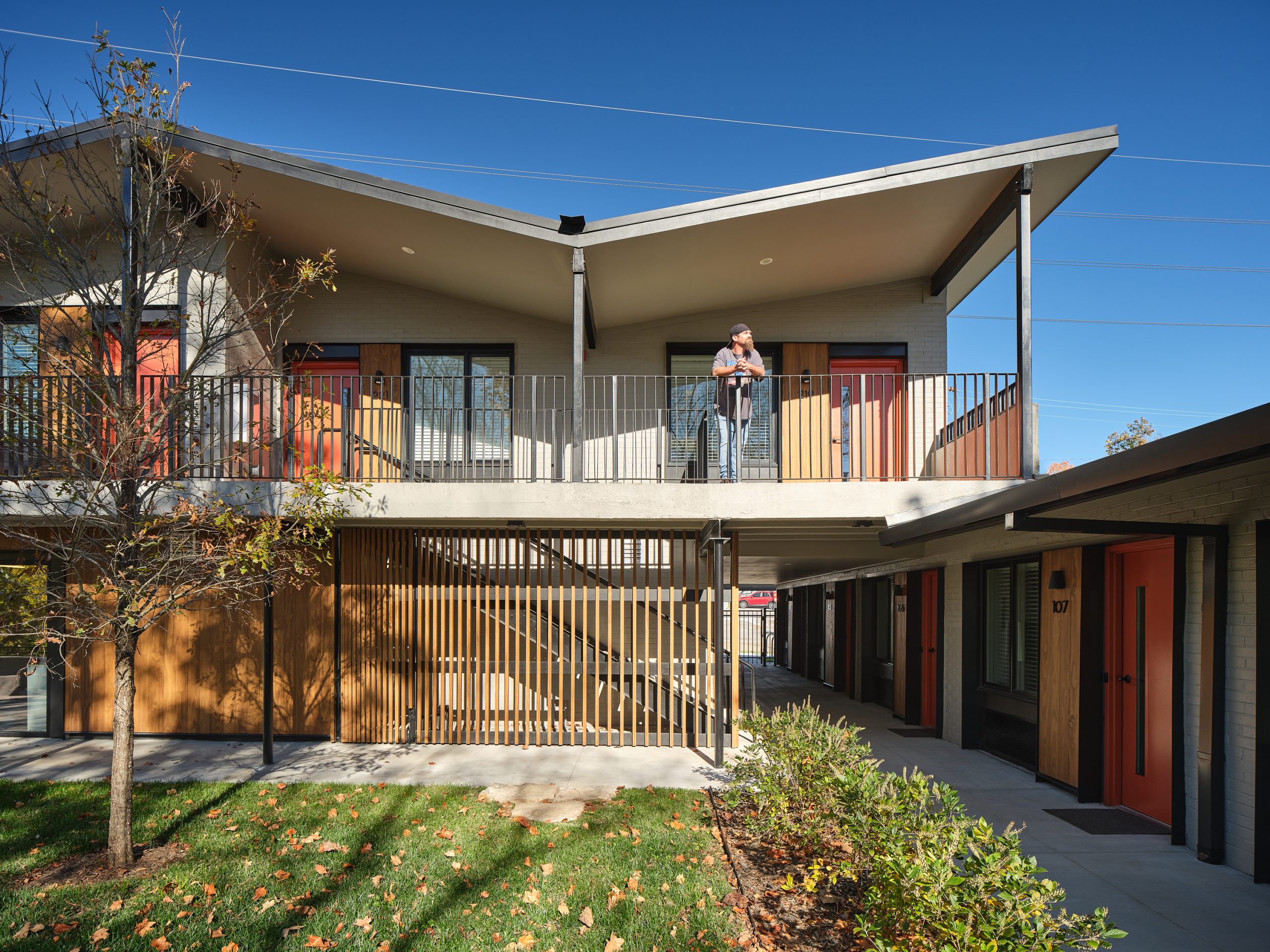
The new development launched by the Fourth Purpose Foundation, known as Dogan-Gaither Flats, will provide counseling, accountability, work placement, and transitional skills training to males returning to Knoxville from incarceration in the 16 dual-occupancy one-bedroom unit apartment development.
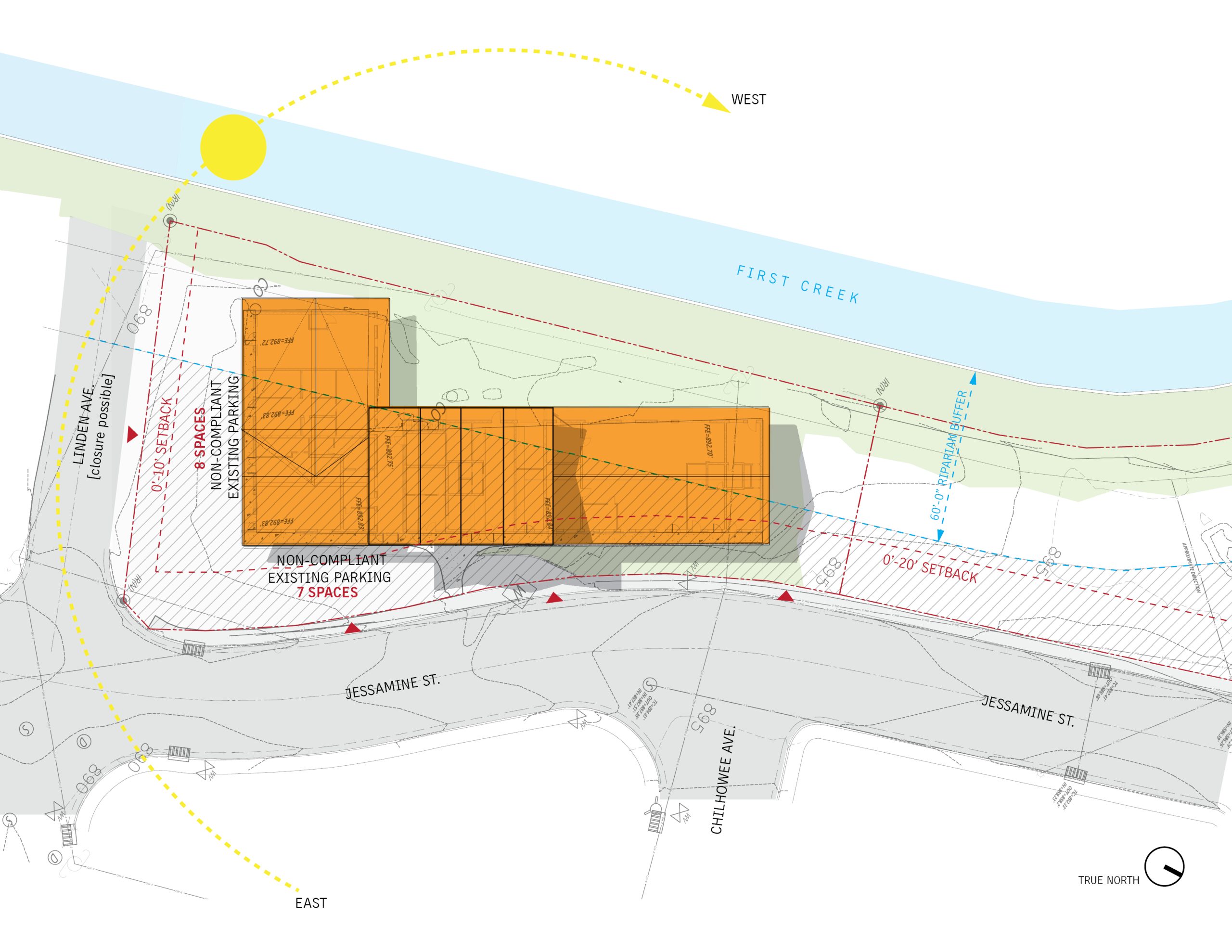
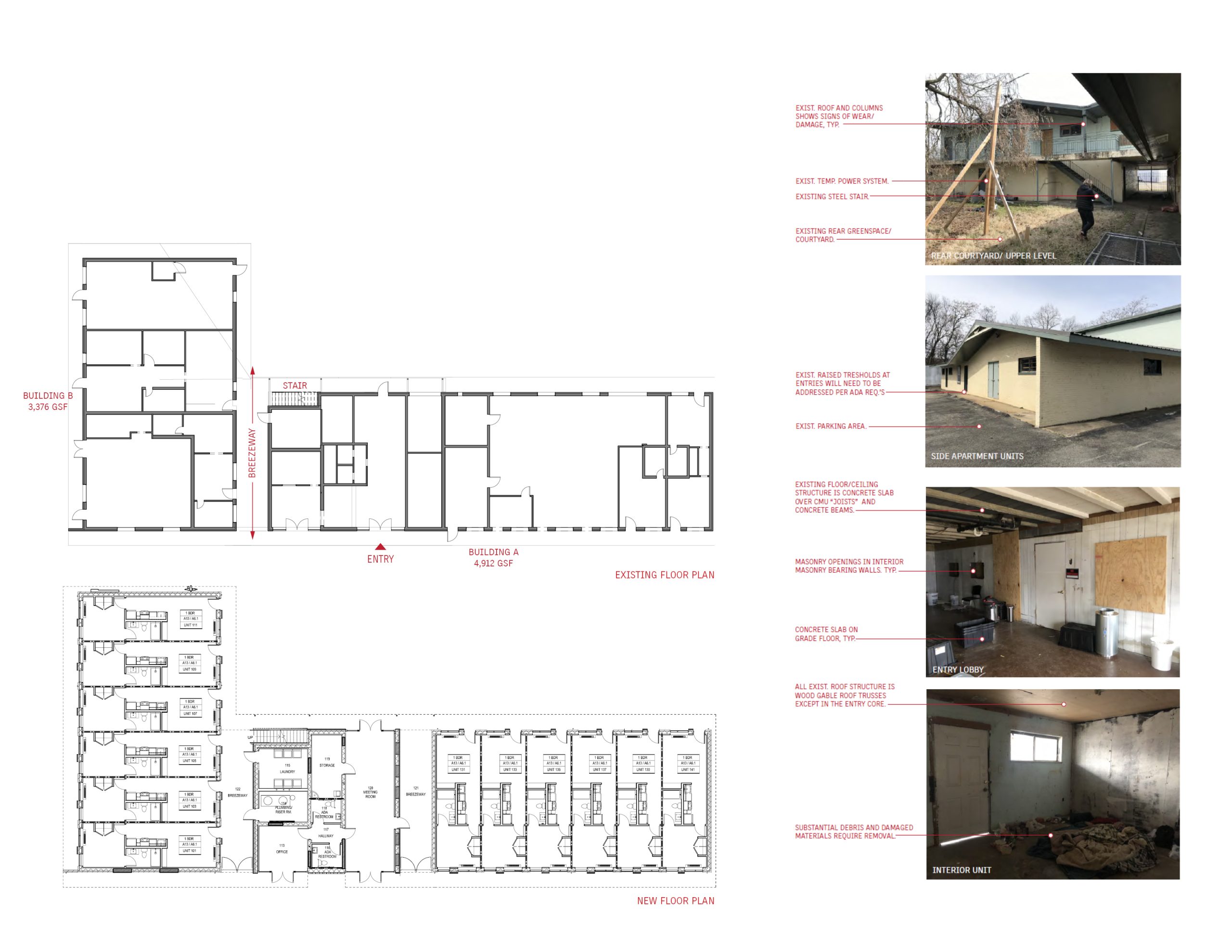
At the onset of the project, the building was in a state of disrepair as it sat abandoned for many years prior to the renovation, and the original floor plan layout had been almost completely rearranged. Our design team carefully studied the existing conditions and what little historic documentation existed for clues to the original grain of hotel units and fenestration patterns. Many of the original openings had been filled in over the years, and as part of the renovation were reactivated and repurposed for new programmatic needs. Necessary structural and envelope updates were made to ensure a long-lasting and sustainable building, new gathering spaces were created, and most of the impervious surface surrounding the building was replaced with landscaped green spaces. During the implementation phase of the project, work crews from the Morgan County Correctional Facility were used on various aspects of the construction. Throughout the design process, and now through the life of the facility itself, the architecture plays a key role in the redemptive story of its inhabitants.
As an extension of the organization work and mission, Fourth Purpose Foundation produced a video with more details on Dogan-Gaither Flats that can be viewed here.